
8 October 2026
This raises a real question: how does the confidence a knowledgeable dealer builds in person survive when the whole process moves online?
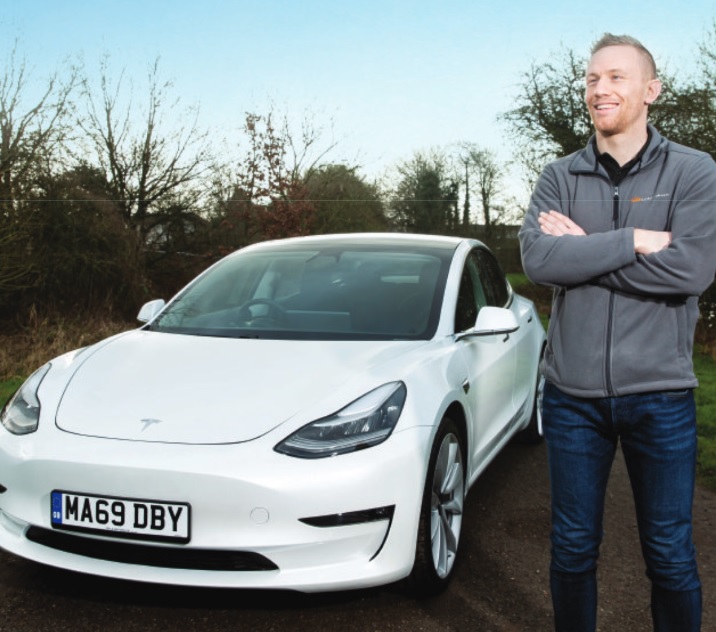
In this blog post, we speak with Rob King at e-car lease, one of our online leasing partners, to walk us through how they do it.
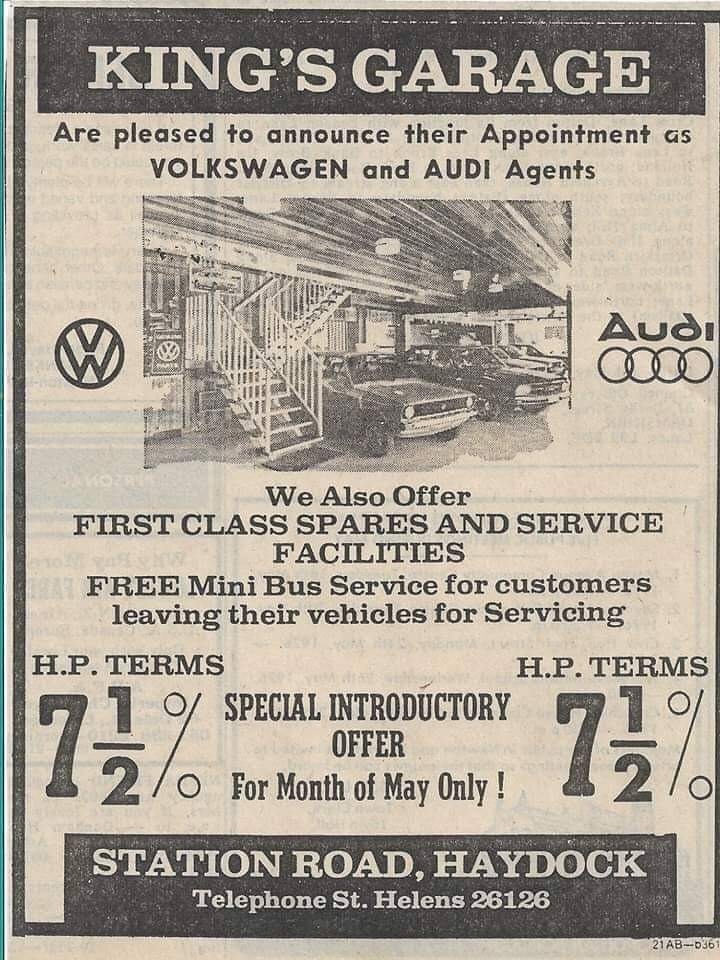
e-car lease is a family-run automotive business with over 60 years of experience supplying new and used cars, vans, and minibuses.
The “Kings” family business has evolved through many phases – a small mechanic workshop, a VW and Audi franchised dealership, a Nissan franchised dealership, a prestige used car centre, and a car and van lease brokerage – until 2015-16, when the early “e-car” brand was created due to the growing interest in electric and plug-in solutions.

In 2020, the direction of our business completely changed, and e-car lease became the flagship brand with an electric-only website created to deliver an entirely digital EV procurement solution for retail and business customers, with a series of unique tools and data added to provide customers with a robust and diligent experience.
Last year, we added a used-EV leasing proposition to supplement the new car and van offering in conjunction with Lex Autolease. And this year, we launched the ‘Lythium’ customer management system, which essentially allows new and used EV customers to self-serve from start to finish on any transaction, supported by our team throughout.
Simplicity and honesty are crucial. As confidence in EVs continues to grow, the necessity to “oversell” their benefits becomes less necessary.
Our website quickly disseminates the key aspects and nuances of the EV lifestyle, such as the disparity between warm and cold weather range or the impact of driving speeds and behaviour on range, which is most easily shown when you compare motorway and city driving. We take a similar approach with the charging times, where we set out the maximum AC and DC capabilities, but break down the different chargers a customer can connect to, along with the corresponding session times.
Context has proved to be key. Charging costs and the cost per mile are topical with the current fuel crisis, but we need to apply some context, especially for new EV drivers. The impetus is to show a customer the car’s maximum capabilities and facets while setting out the different cases an EV driver may actually experience. With more drivers entering the new and used EV market, the conversations are developing in a positive way, and terms like kW, kWh and bidirectional charging, no longer feel alien to most customers.
By default, our “full charging cost” will use the Ofgem price cap, but customers can amend this to their actual home tariff. Our EVC™ will further highlight the discrepancy in costs between charging at home tariffs and using the public network. Not all EV drivers are fortunate enough to have dedicated home charging solutions, and those customers need additional information and support to make the transition seamlessly.
Repetition is not to be underestimated. For many new and used EV customers utilising some form of finance, there is a litany of things to factor in – from the nuances of the finance, the specification of the car or its performance – and it’s important that we give them time to digest these to avoid misunderstandings.
Customers will begin their journey with a full and detailed overview of the vehicle.
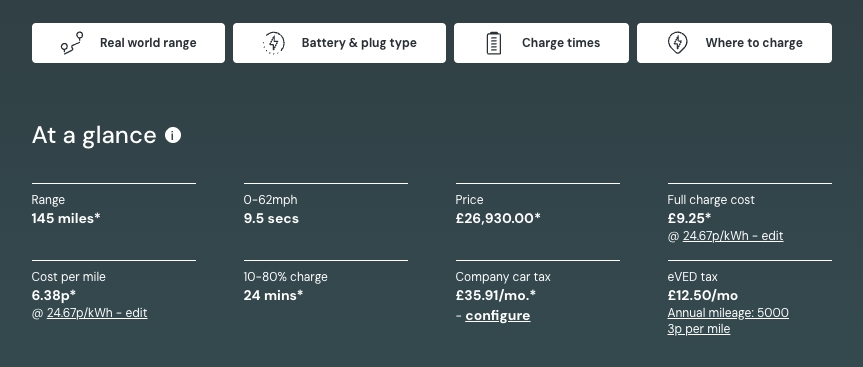
To ensure consistency, the Lythium portal will reiterate the key specifications and performance of the vehicle and simplify its operation within the EVC™. Finally, at the point of order, customers will be asked to review the EVC™, along with the actual contract hire order form, to make the final assessment.
The Lythium portal also allows them to cross-check vehicle specifications and performance against the vehicle which has been delivered – which is something many first-time customers particularly appreciate.
Getting a car can be a complicated process, especially if you’re new to EVs. To be candid, before we introduced the EVC™(Electric Vehicle Certificate), we experienced customer confusion and inefficiencies. We realised we needed to improve our standards of service to help our customers make an informed decision.
So, as EV drivers ourselves, we considered what we would want to know before making the move (especially if this was our first time going electric).
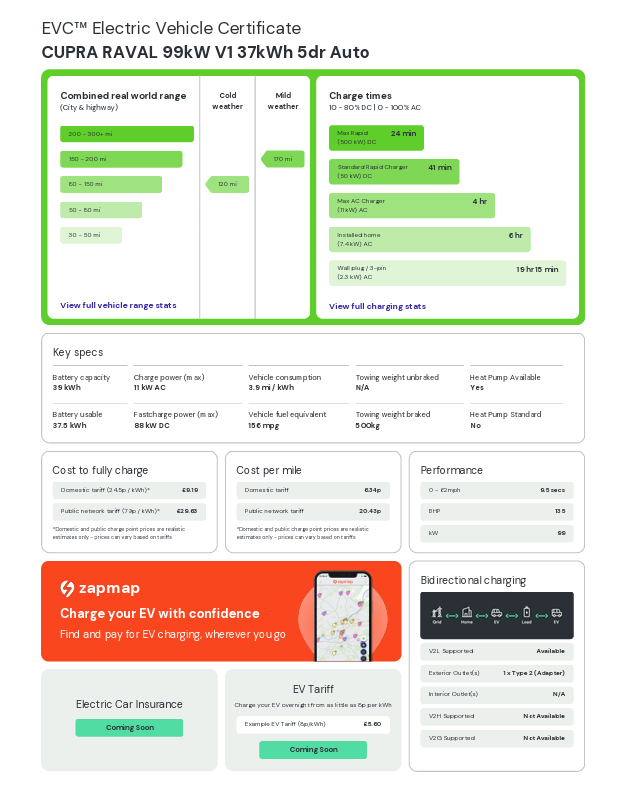
The EVC™ provides a succinct yet detailed analysis of EV performance, highlighting the key details which a driver needs to consider.
It has evolved over time, but it’s always covered the core facets of range, charging, efficiency, performance and battery capacity. It now also touches on more specific metrics like heat pumps, bidirectional charging and vehicle consumption in miles per kWh – so it works for both first-time and more experienced EV drivers.
Here at e-car, we firmly believe in being part of the solution. Confidence will always be a fundamental driver for EV adoption, and automotive businesses should play their part to ensure the net-zero transition is a success. Certification is a key topic in both the new and used EV market, and with the EVC™, we wanted to set an example for other businesses to follow.
Confidence in EVs is being propagated by more than just the vehicles. New and used EV dealers have a responsibility to offer a balanced analysis of the EV lifestyle and have an integral role in setting standards – actively setting out the cost of eVED is just one small part of that.
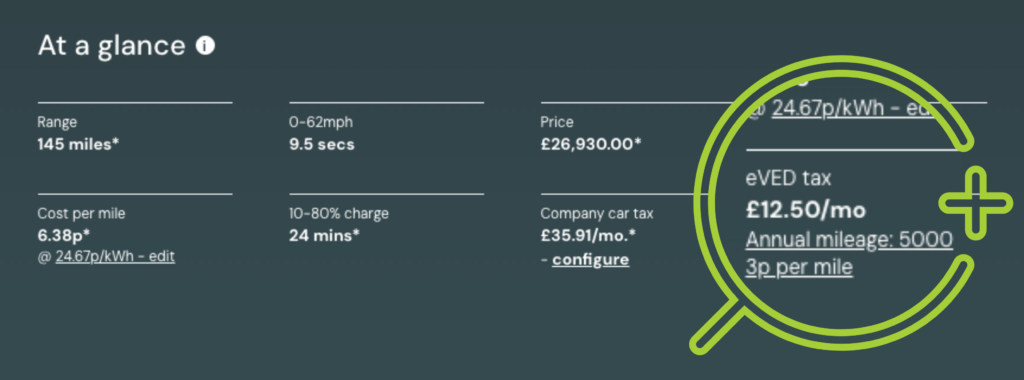
The eVED calculator is in the vehicle overview and links to the prospective customer’s mileage, setting out the monthly cost once eVED comes into effect in April 2028. Not all customers are aware of this upcoming change, and whether we agree or disagree with the Government’s decision, our ethos is to be upfront with our customers. While many are unhappy with this new tax, customers are grateful that we flag this early.
While this has been done on a small scale with combustion vehicles, the move to used EV contract hire/leasing was a big change for our industry.
The used vehicles we offer through Lex Autolease, one of our finance companies, are ex-lease vehicles that get “re-leased” on 12 month – 48 month contracts. Many of these vehicles are around 2- 4 years old and will have around 10,000 – 30,000 miles – so not particularly heavy-use vehicles – which has the advantage of keeping defects and imperfections to a minimum.
All come with a maintenance package, which includes the cost of all servicing, maintenance, tyres (including punctures), breakdown recovery and battery protection. In addition, an AVILOO battery certificate is also available to add further confidence.
The removal of maintenance risks and battery concerns, combined with the flexibility of a lease, has proved equally popular with personal and business customers. This has opened a choice of vehicles to customers that they would otherwise be unable to afford or would be too worried to choose. The team over at Lex deserve recognition and credit for this pioneering approach.
What comes through in our conversation with e-car lease is that they have built a genuine commitment to transparency at every stage of the customer journey: being upfront about costs, honest about real-world range, and clear about how charging actually works in practice.
That is what good practice looks like online. And as our survey data shows, it is still far from universal.
You can read more about what drivers actually experience at the point of sale, and where the gaps remain, in the first post in this series on what good looks like for drivers at the dealership.
They take investment, training and a genuine commitment to helping drivers make the switch with confidence.
EVA England represents EV drivers and those considering switching, making sure that the experience of buying or leasing an electric vehicle improves across the whole market, not just at the best dealerships.
If you would like to support our work and help us raise the bar for EV drivers at the point of sale, you can get involved by becoming a member, a supporting partner or donating directly to EVA England.
Every member and contribution helps us make sure that EV drivers’ voices are heard, and that the advice and support people need to go electric is there when they need it.