What is it like to drive an EV?
Driving an EV is a different experience compared to petrol or diesel vehicles.
EVs are almost silent, deliver smooth and responsive acceleration thanks to instant torque, and have no gears or clutch to manage.
Many have their battery mounted in the floor, creating a low centre of gravity that improves stability and handling.
Most people who try an EV are surprised by how much they enjoy it, and they find it hard to go back to a petrol or diesel car afterwards.
What about range? Will I run out of charge?
Range anxiety is one of the most common concerns for people considering an EV, but for most EV drivers, it quickly becomes a non-issue.
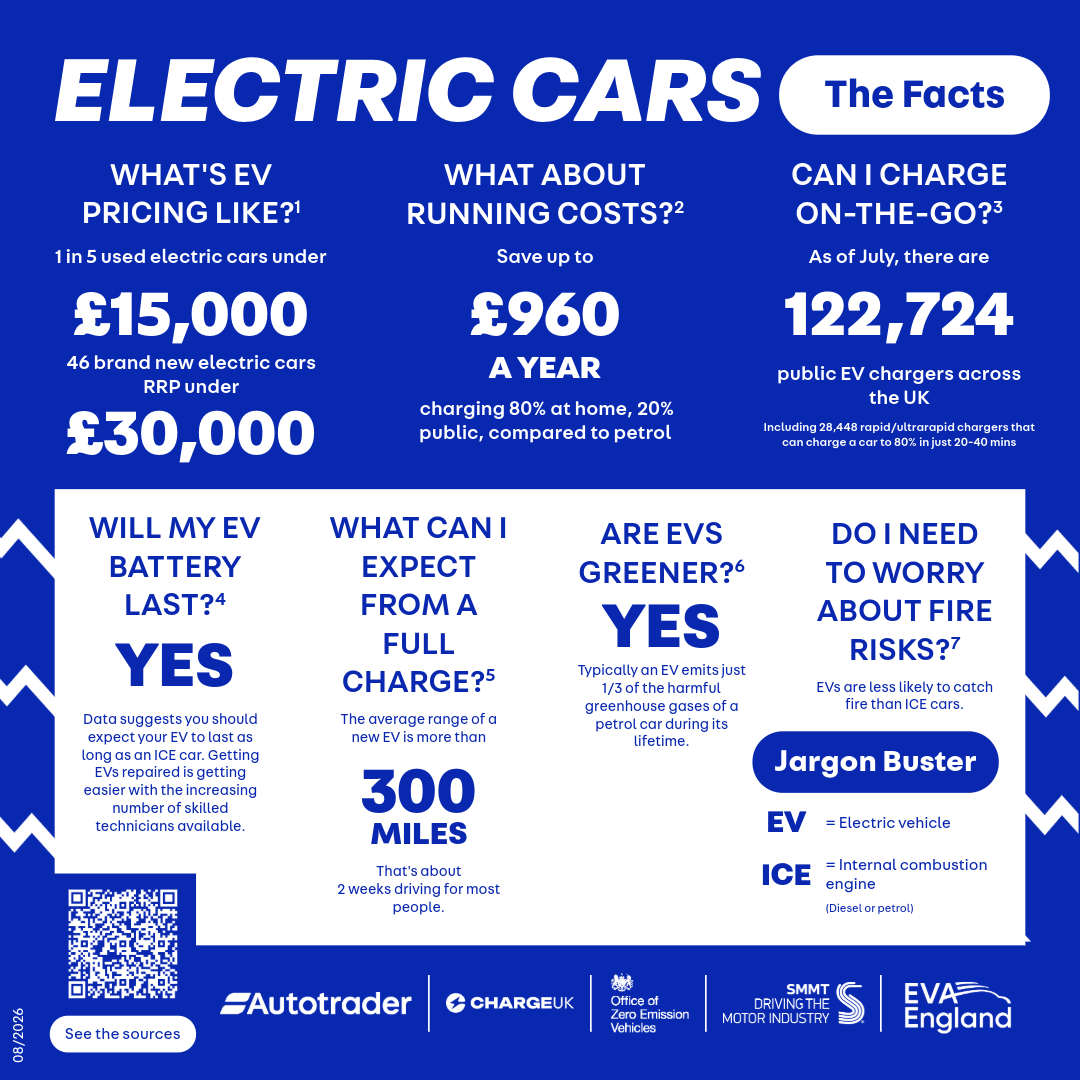
New EVs now offer an average range of 300 miles on a single charge (up from 235 miles just a year ago), with some models exceeding 400 miles.
The average car journey in England is under 10 miles, so even a modest EV has far more range than most daily driving requires. And if you can charge at home overnight, you typically start every day with a full battery, with no detours to a petrol station needed.
How much do EVs cost to buy?
New EV prices in the UK currently range from around £20,000 to over £100,000 depending on make, model and specification.
Some models do carry a higher upfront cost than a comparable petrol car, but this gap is closing and analysts forecast EVs will reach price parity within the next few years.
From August 2025, new EVs priced under £37,000 qualify for up to £3,750 off through the Plug-in Vehicle Grant.
There’s also a growing second-hand market, with two in five used EVs now listed for under £20,000.
How much do EVs cost to run?
Just like petrol and diesel cars, the cost of running an EV will vary depending on the model, make and specification of the vehicle.
However, EVs are generally cheaper to run than petrol or diesel cars. They require less maintenance due to fewer moving parts, and electricity is significantly cheaper than petrol or diesel, sometimes costing only around one-fifth of equivalent fuel expenses.
In addition, EVs benefit from cheaper preferential first-year Vehicle Excise Duty (VED) compared to their petrol and diesel counterparts (more details here), and you can also get a discount in cities that have introduced Congestion Charge or Low Emission zones.
Zap Map have put together this Journey Cost Calculator tool which allows drivers to compare the cost of running an EV with petrol or diesel vehicles for their own journeys.
Is buying a second-hand EV a good idea?
Increasingly, yes.
The used EV market is growing quickly, with more options available through dealerships, online marketplaces, and even salary sacrifice schemes where employees can lease pre-owned EVs through their employer while benefiting from tax and National Insurance savings.
A second-hand EV is a popular choice as it access to advanced technology and lower running costs at a reduced price, making it a great option for drivers who want to switch without paying new car prices.
The key thing to check is battery health, which brings us to the next question.
How long do EV batteries last? And do they degrade?
EV batteries do experience some degradation over time, but real-world evidence suggests this happens too slowly enough to be a practical concern for most drivers.
Most manufacturers back this up with extensive battery warranties of eight years or 100,000 miles. Nissan, for example, will replace the battery on a new LEAF free of charge if there is a failure or if degradation reaches an unacceptable level (a reduction of 25% from its original capacity).
To help preserve battery health, it’s generally recommended to keep charge levels between 20–80% and avoid frequent rapid charging where possible.
EVA England have partnered with ClearWatt, who provide used EV buyers, sellers and owners with transparent, independent battery health reports and unique data insights.
Can the electricity grid cope with everyone charging?
At a national level, the answer is broadly yes. Because people charge at different times and in different places across the UK, the overall demand is more spread out than you might expect and the industry is confident the national grid can handle the transition.
The more nuanced picture is at a local level. If a large number of people on the same street (or more specifically on the same substation feeder) all plug in at peak times, that can put pressure on the local electricity network. This is a challenge that the industry is actively working to solve, and the good news is that a range of solutions are already being rolled out:
- Smart charging allows the timing of EV charging to be managed automatically, smoothing demand away from peak hours.
- Battery storage, using electricity generated from off-peak renewables like solar or wind, can also help buffer local demand.
- Vehicle-to-grid (V2G) technology, which allows energy to flow back from an EV’s battery into the grid at peak times, is currently in trials and expected to become more widely available in the coming years.