
5 August 2026
ChargeGuru is a brand supporter of EVA England, providing fully-funded EV charging infrastructure to apartment buildings and offices across the UK.
In this guest post, Denis Watling, Managing Director of ChargeGuru UK, looks at what recent changes to OZEV grant funding mean for apartment dwellers, and the routes open to residents, property managers and freeholders trying to make charging work at a building-wide level.
Electric vehicle (EV) ownership is becoming increasingly mainstream, but for many people living in flats, the transition is still far from straightforward. While recent updates to the Office for Zero Emission Vehicles (OZEV) grant scheme will mean more money to drivers for installing chargepoints, they also leave them exposed to what is a complex process, placing greater responsibility on individuals than ever before.
Since the 1st of April, changes to OZEV funding have altered how EV chargepoint installations are supported. While the grant available to individuals installing a home charger has increased to £500, wider support for shared infrastructure in multi-occupancy buildings has been removed.
For apartment residents, this change is significant. Unlike homeowners with driveways, most flat-dwellers depend on shared electrical infrastructure to enable charging at scale. Without upfront support for this foundational work, installing chargers becomes more challenging, and often impractical, at a building-wide level.
In effect, the emphasis has moved away from collective, future-proofed solutions and towards individual action. This means residents are now expected to navigate installation processes themselves, even in environments that aren’t set up to support piecemeal solutions.
In blocks of flats, EV charging isn’t as simple as installing a single unit. It typically requires coordinated infrastructure, including cabling, load management systems, and sufficient electrical capacity to support multiple users safely and efficiently.
Previously, landlords could access funding to support this groundwork, helping to prepare entire buildings for long-term EV adoption. With that support no longer in place, many property managers and freeholders are reconsidering or postponing plans due to the higher upfront investment required.
For the roughly one in five UK households living in flats, this makes access to home charging less certain. While the individual grant still exists, it doesn’t address the underlying challenge that without shared infrastructure, individual installations are often not viable.
With the £500 grant now focused on individual installations, some residents may look to take matters into their own hands. While understandable, this approach can create complications in apartment settings.
Uncoordinated installations risk introducing issues such as uneven electrical loads across the building, billing and metering complexities, safety concerns from cables running through shared spaces and long-term compatibility challenges between systems.
Over time, this can result in a fragmented, inefficient and often unsafe charging environment that is both difficult and costly to standardise at a later date.
This is why EV charging in flats typically works best when planned collectively, with a long-term view of how demand will grow.
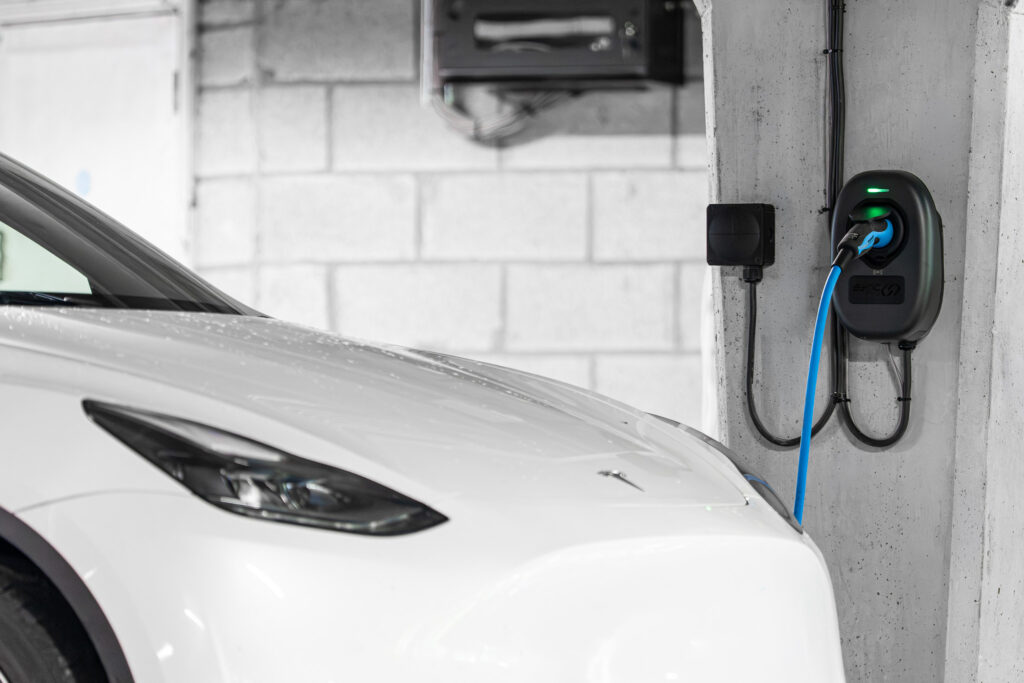
Despite these challenges, demand for EV charging among residents continues to grow. Access to reliable, on-site charging is increasingly seen as an essential amenity rather than a luxury.
For property managers, this presents a balancing act. While the funding landscape has become more complex, expectations from current and prospective residents are only increasing.
Subsequently, buildings that lack a clear EV charging strategy may find themselves at a disadvantage over time.
Although the removal of infrastructure grants has made things more difficult, there are still viable routes to delivering EV charging in apartment buildings.
Freeholder-funded infrastructure allows building owners to invest directly in upgrading electrical capacity and install scalable systems. While this requires significant upfront capital, it allows for long-term control and planning.
Resident-led funding models mean that in some cases, costs can be shared among residents who want access to charging. However, this approach can be difficult to coordinate and may create tensions between EV and non-EV residents.
Increasingly, third-party specialist providers are offering fully funded models where infrastructure is installed and managed externally. This removes the upfront cost barrier and ensures systems are professionally designed and maintained.
However, it’s worth noting that the updated OZEV process can involve more administrative steps for residents, including additional evidence and application requirements, which may extend timelines. While approvals for the Electric Vehicle Chargepoint Grant for Renters and Flat Owners were previously almost instantaneous, customers now face wait times of up to two months to hear back on their applications. Because approval must be granted before work can begin, this administrative gridlock directly delays chargepoint rollouts for EV drivers living in apartments.
Ultimately, the latest OZEV changes don’t remove the opportunity for apartment dwellers to access EV charging, but they do make it more complex. The onus is now more firmly on residents, property managers, and industry providers to work together to find workable solutions.
For managing agents and freeholders, early engagement is key. Developing a safe, building-wide strategy, even if implementation is phased, can help avoid costly, reactive approaches in the future. For residents, understanding the constraints and working collaboratively with building management will increasingly be part of the process.
The UK’s transition to EVs will only succeed if it works for everyone, including those without driveways. While policy changes have shifted the landscape, they also highlight the importance of coordinated planning and innovative delivery models.
With the right approach, it is still entirely possible to deliver safe, scalable, and accessible EV charging in apartment buildings, but it now requires more proactive involvement from all sides.
In their white paper, Putting the Driver First, EVA England is calling on Government to help close that gap. They are asking for the £200m of charging infrastructure funding announced in the 2025 Autumn Budget to be targeted where there are still ongoing market failures – including supporting grid connections for multi-unit dwellings, to bring down the cost of installation for landlords and residents.

With a proven track record of success across six countries – including France, Spain, Portugal, Germany, Italy, and the UK – ChargeGuru has already made over 2 million parking spaces EV-ready. Dedicated to innovation and future-proof solutions, they are accelerating the transition to sustainable mobility and leading the charge towards a greener, more accessible e-mobility future.