22 January 2026
Drivers without driveways are being locked out of affordable electric vehicle charging by cost, confusion and council delays, according to new evidence we submitted to a government consultation on reforming planning rules for cross-pavement charging.
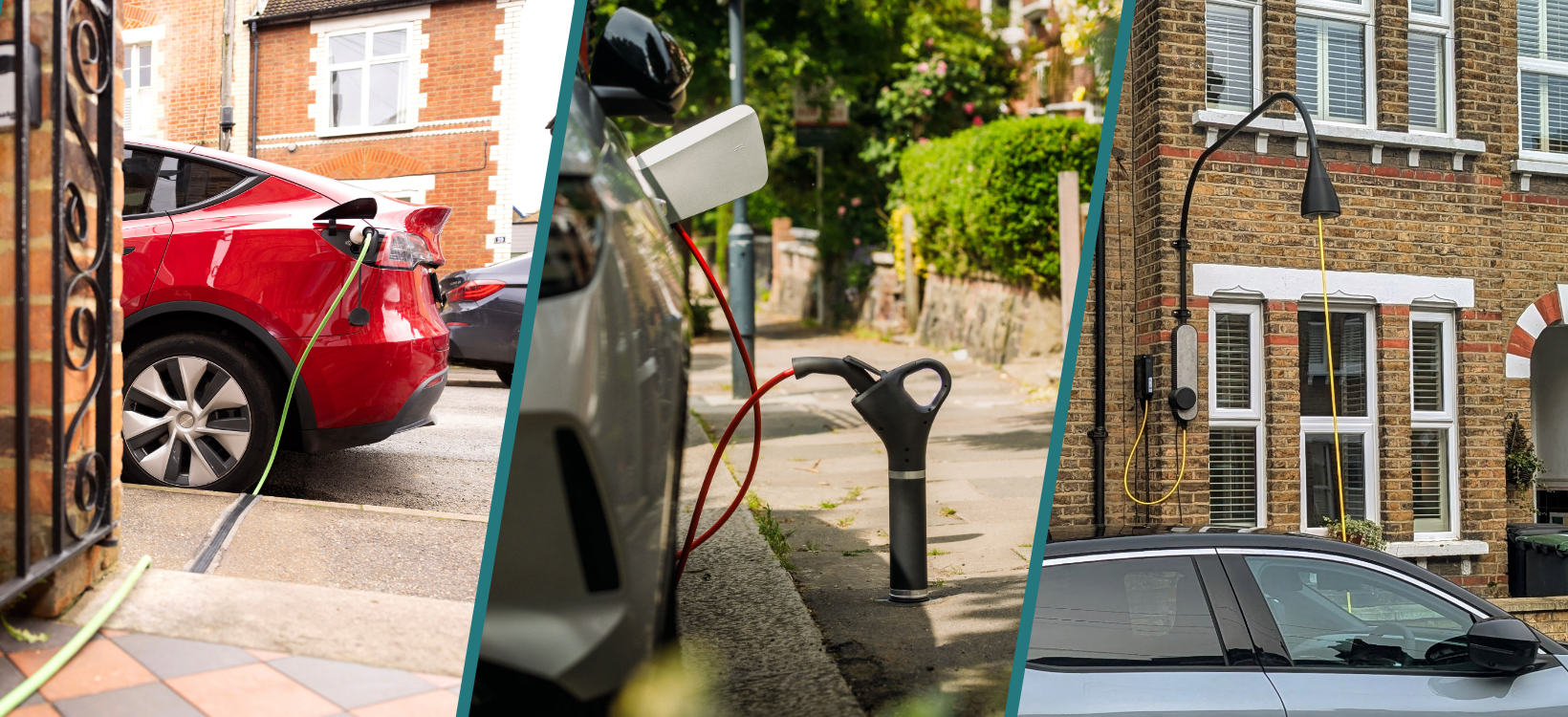
Our latest driver survey, focused specifically on cross-pavement charging solutions, shows overwhelming unmet demand for technologies that allow drivers to charge safely from home, even when they park on the street. Of drivers without a driveway, more than nine in ten (93%) do not currently have a cross-pavement solution – yet nearly four in five (78%) say one could realistically work for their home.
Despite this, only eight drivers surveyed had been able to install a solution. Many described repeated refusals, months or even years of silence from councils, or being deterred by planning costs that in some cases added around £500 per household on top of installation costs approaching £3,000.
Drivers reported frustration at being told such solutions were unsafe, while being tacitly allowed to trail charging cables across pavements with mats – something many felt posed a far greater risk to pedestrians. “We have sometimes run a cable across the pavement,” said one driver. “It doesn’t really feel like a solution – but nobody has ever commented on it.”
Where cross-pavement solutions had been installed, feedback was overwhelmingly positive. Drivers described them as safer, easy to use, and transformational in reducing charging costs. One respondent said: “A cable gully would be ideal. I have solar and off-peak electricity. It’s cheaper for me, better for the grid, and avoids cluttering the street with chargers.” Others said they were delaying buying an EV altogether until such a solution was available.
Our submission supports the government’s proposal to introduce new permitted development rights for cross-pavement charging and associated domestic chargepoints, removing the need for a planning application while keeping local authority control over highway safety and accessibility. Drivers told us that planning complexity and uncertainty alone was enough to stop them applying.
The findings echo broader evidence from our earlier, large-scale annual driver survey, which shows the wider consequences of the charging divide. While most EV drivers with driveways find their cars cheaper to run, only half of those without off-street parking do – and drivers reliant on public charging face costs that can be several times higher than charging at home.
The consultation comes amid growing policy focus on fairness in EV charging, following recent parliamentary debates and commitments by government to look again at barriers facing households without driveways.
“Drivers are telling us the same thing again and again: the technology exists, the demand is there, but the system is getting in the way. Cross-pavement charging could unlock affordable home charging for millions of households, yet too many drivers are stuck waiting, paying more, or putting off going electric entirely.
“This consultation is a real opportunity to remove one of the most frustrating and unnecessary barriers drivers face. We hope the Government will act on it.”
For drivers without a driveway, these are real and positive steps. Cross-pavement charging will not be right for everyone, but where it does work, it can mean access to cheaper charging, lower running costs, and one less barrier to switching to an EV.
EVA England is calling for clear national rules, lower costs, and better guidance for councils and residents so that cross-pavement charging can become a normal, accessible part of the UK’s charging landscape – ensuring the transition to electric works for drivers regardless of whether they own a driveway.
Ian Mackenzie, Chief Executive Officer, Trojan Energy, said:
“Trojan Energy agrees that a clear driveway divide exists across the UK. There are proven, safe on-street charging solutions that do not intrude on the experience of other pavement users. Without strong deployment of these solutions, the 35% of drivers who park on-street risk being locked out of cheaper charging, seriously undermining equitable EV uptake and a truly just transition.”
Ben Macdonald, Managing Director at Nodum, said:
“Ensuring that as many people can charge using the cheapest overnight energy is critical to ensuring that this transition is just and inclusive. Solutions need to be tailored to the needs of residents and also be sympathetic to the British built environment. Cross pavement solutions will enable more people to make the switch to cheaper motoring”.
Michael Goulden, Co-Founder of Kerbo Charge, said:
“Removing the need for planning permission for a home charger when a resident already has local authority approval for a cross-pavement channel is common sense and vital for removing red tape for UK residents. In our own survey completed by 2,800 drivers with on-street parking, 43% said that needing to get planning permission for a charger would completely deter them from getting an EV. Scale this up to the 7 million terraced houses in the UK and this means around 3 million households will never get an EV unless this legislation is changed.”
The charging divide remains one of the biggest barriers to wider EV adoption. Progress on cross-pavement charging shows that this gap is finally being taken seriously at the highest levels
EVA England campaigns for charging that works for everyone, not just those with driveways, so that no driver is left behind in the transition to electric.
If you would like to support our work and help us tackle cost and access inequalities,, you can get involved by becoming a member, a supporting partner or donating directly to EVA England.
Every member and contribution helps us make sure EV drivers’ voices are heard in Parliament and that the UK’s charging infrastructure works for everyone.